
The Future of the Grid: Why Virtual Power Plants Are Leading the Decentralized Energy Revolution
The Department of Energy predicts that up to 160 GW of new resources will be needed by 2030 to meet rising U.S. electricity demand. As energy demand surges and aging infrastructure lags behind, the national power grid is under significant pressure to keep pace. These centralized systems also face growing challenges: integrating renewable energy, managing transmission congestion and responding to increasingly extreme weather events. In response, virtual power plants (VPPs) have emerged as a flexible, scalable solution that uses existing distributed energy resources to create a more responsive, resilient grid.
What is a Virtual Power Plant?
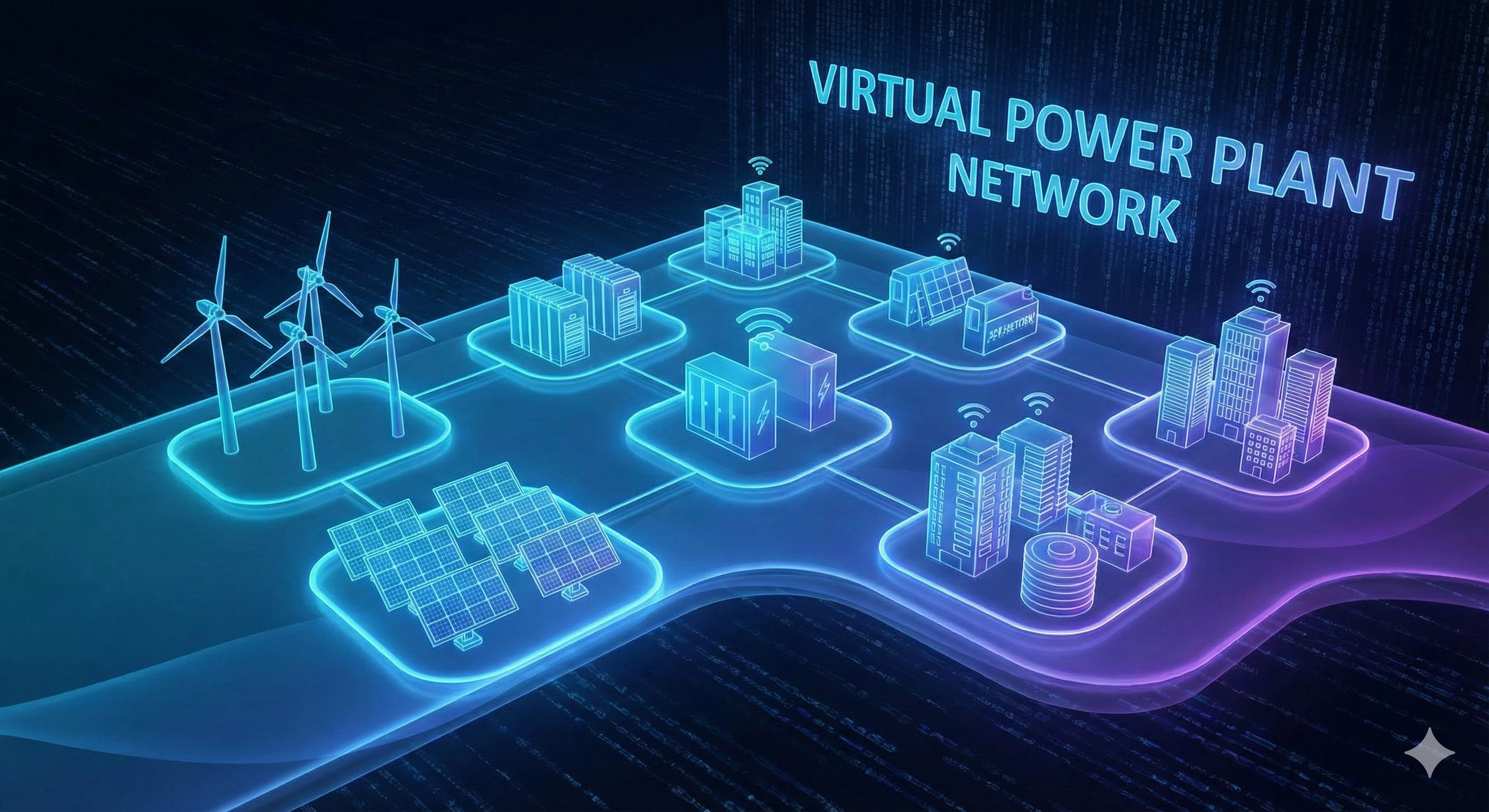
A virtual power plant is a cloud-based network that aggregates small-scale energy assets—such as solar panels, wind turbines, battery storage systems, electric vehicle (EV) chargers and demand response programs—and manages them as a single dispatchable resource. Unlike traditional power plants, VPPs dynamically adjust energy production and consumption in real time using AI and predictive analytics.
Three core functions define how VPPs operate:
Aggregation: Combines energy assets across locations into a unified system.
Optimization: Uses intelligent software to manage timing, scale and resource efficiency.
Market Integration: Interacts with utility markets, supplying or storing energy based on demand, price and availability.
By leveraging existing infrastructure and real-time data, VPPs provide a cost-effective alternative to new plant construction while improving grid stability.
Benefits of Virtual Power Plants
Grid Resilience: Traditional grids rely on centralized plants and long transmission lines—both vulnerable to weather and degradation. VPPs distribute generation and storage across the grid, enabling faster response during outages and demand spikes.
Renewable Integration: VPPs address the cyclicality of solar and wind by storing energy or adjusting demand as needed, helping renewables operate reliably at scale.
Lower Infrastructure Costs: By maximizing the value of distributed energy resources, VPPs help utilities delay or avoid major infrastructure projects—saving billions in costly upgrades.
Increased Market Participation: Businesses with solar panels, batteries or flexible load can earn revenue by joining VPP networks and contributing energy or demand flexibility.
What's Needed for VPPs to Scale
For VPPs to continue to scale across the energy landscape, utilities, businesses and regulators must focus on:
Advancing AI & Forecasting: Strengthen demand and supply prediction tools to enable smarter, real-time optimization of distributed energy resources.
Expanding Participation: Make VPPs more accessible to commercial and residential energy users.
Integrating EVs: Leverage electric vehicles and smart charging as mobile grid assets.
Fostering Collaboration: Build stronger partnerships between technology providers, utilities and policymakers.
Focusing on these areas will accelerate the transition to a more dynamic, decentralized grid, one capable of withstanding modern demands.
A Smarter, Decentralized Future
VPPs are no longer a theoretical solution. They’re already reshaping energy markets and grid operations. By aggregating and intelligently managing distributed energy, they offer a more flexible, cost-effective path forward. As demand grows and infrastructure ages, VPPs will play a pivotal role in creating a resilient, sustainable energy future.
Enersponse is at the forefront of this advancement, helping organizations seamlessly integrate into VPP networks through intelligent, automated demand response solutions. Learn more about how Enersponse can help your facility become part of the next generation of grid innovation today.
